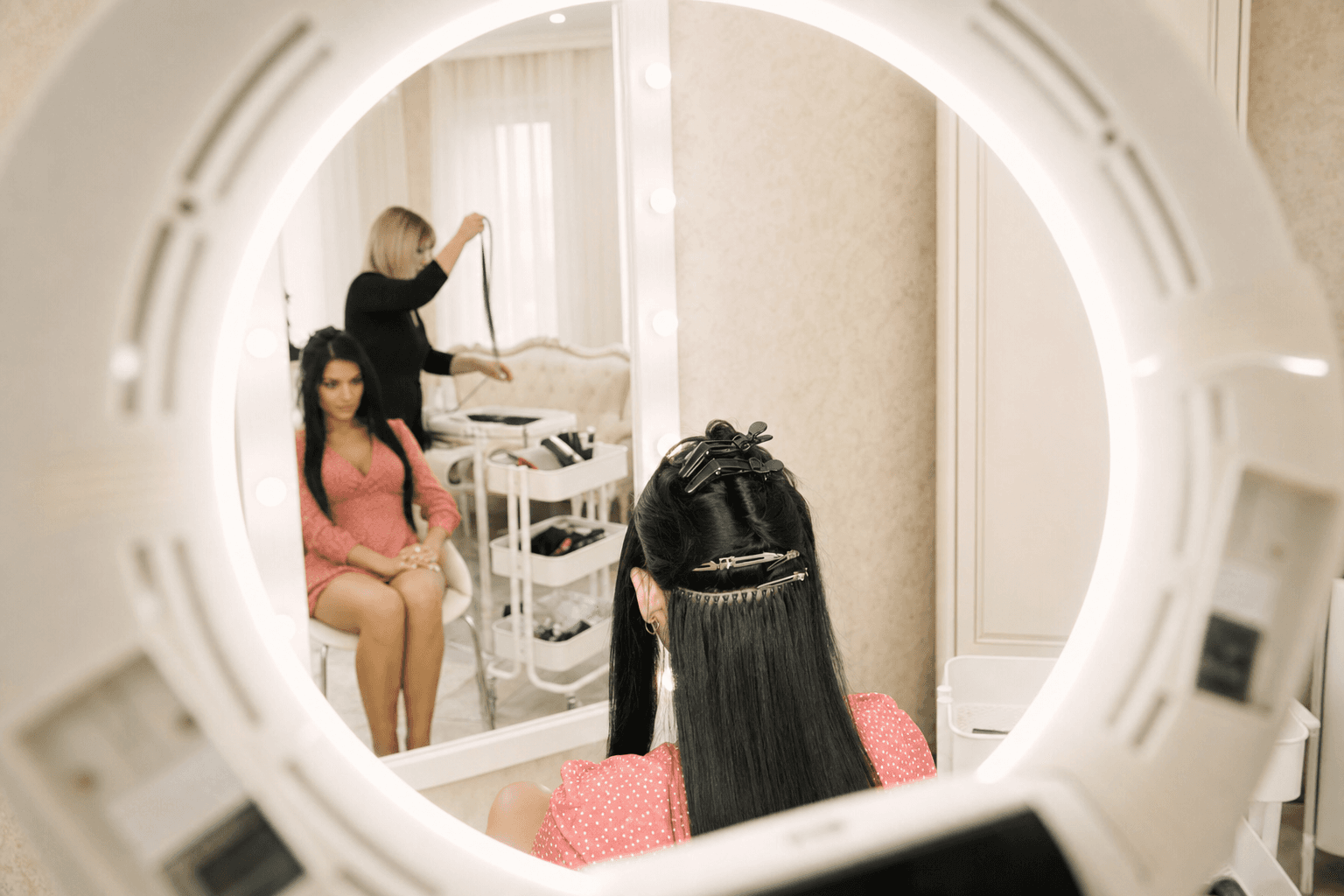
Three real hair extension methods are on the menu here: Silk Flat Weft, Keratin Bond, and Microbead (I-Tip). Each attaches differently, feels different day to day, and suits a different hair type or goal. There's no single "best" method, only the one that's actually right for your hair, so here's an honest look at how the three compare before you book a consultation.
Silk Flat Weft
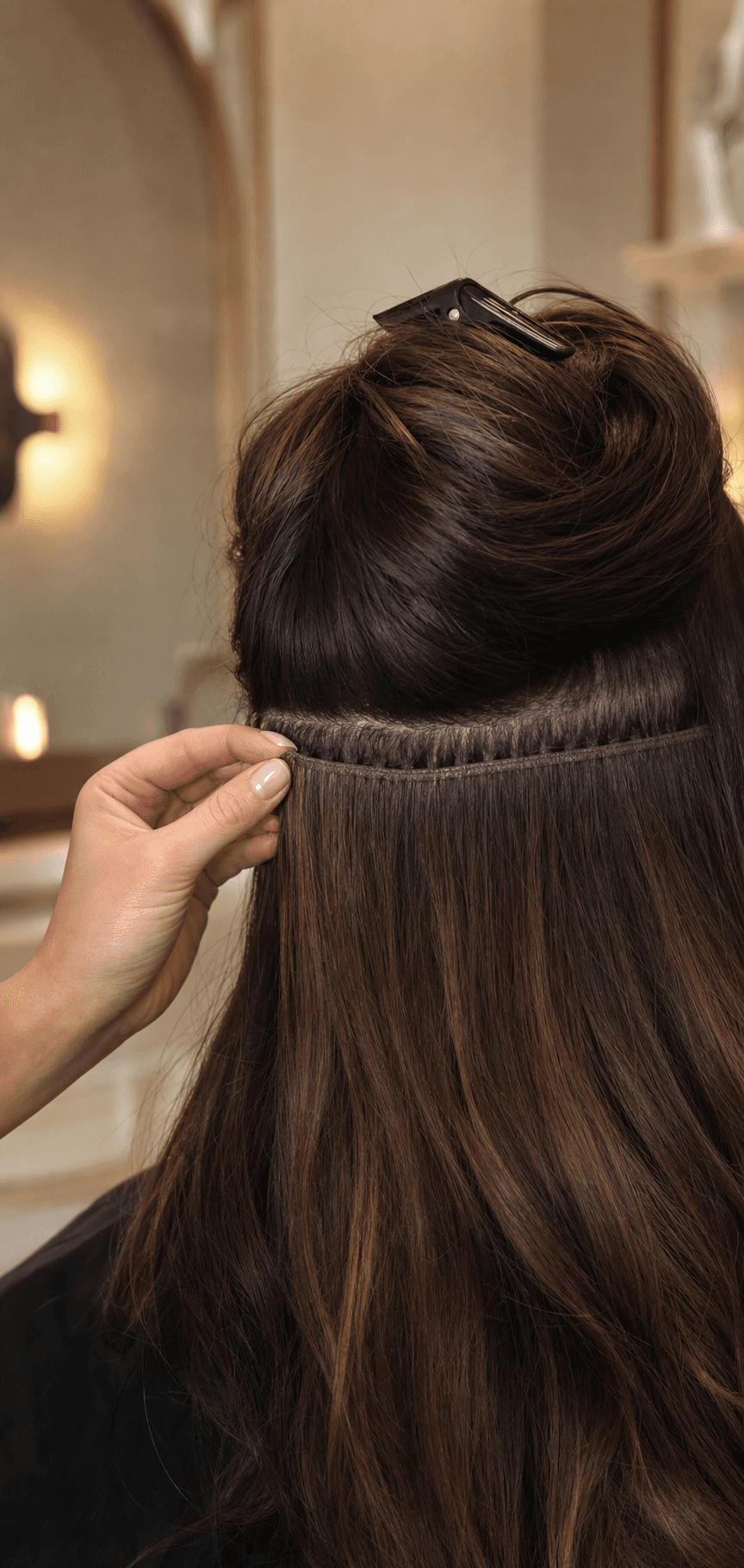
Silk Flat Weft rows sit flat against the head rather than being attached one strand at a time, which is what keeps them discreet under your own hair. It's worth considering if you want a noticeable amount of length and volume added in one appointment without lots of small individual attachment points. It's on a $699 introductory offer: a $300 holding deposit secures your appointment and $399 is paid on the day. Timing is confirmed at your consultation.
Keratin Bond
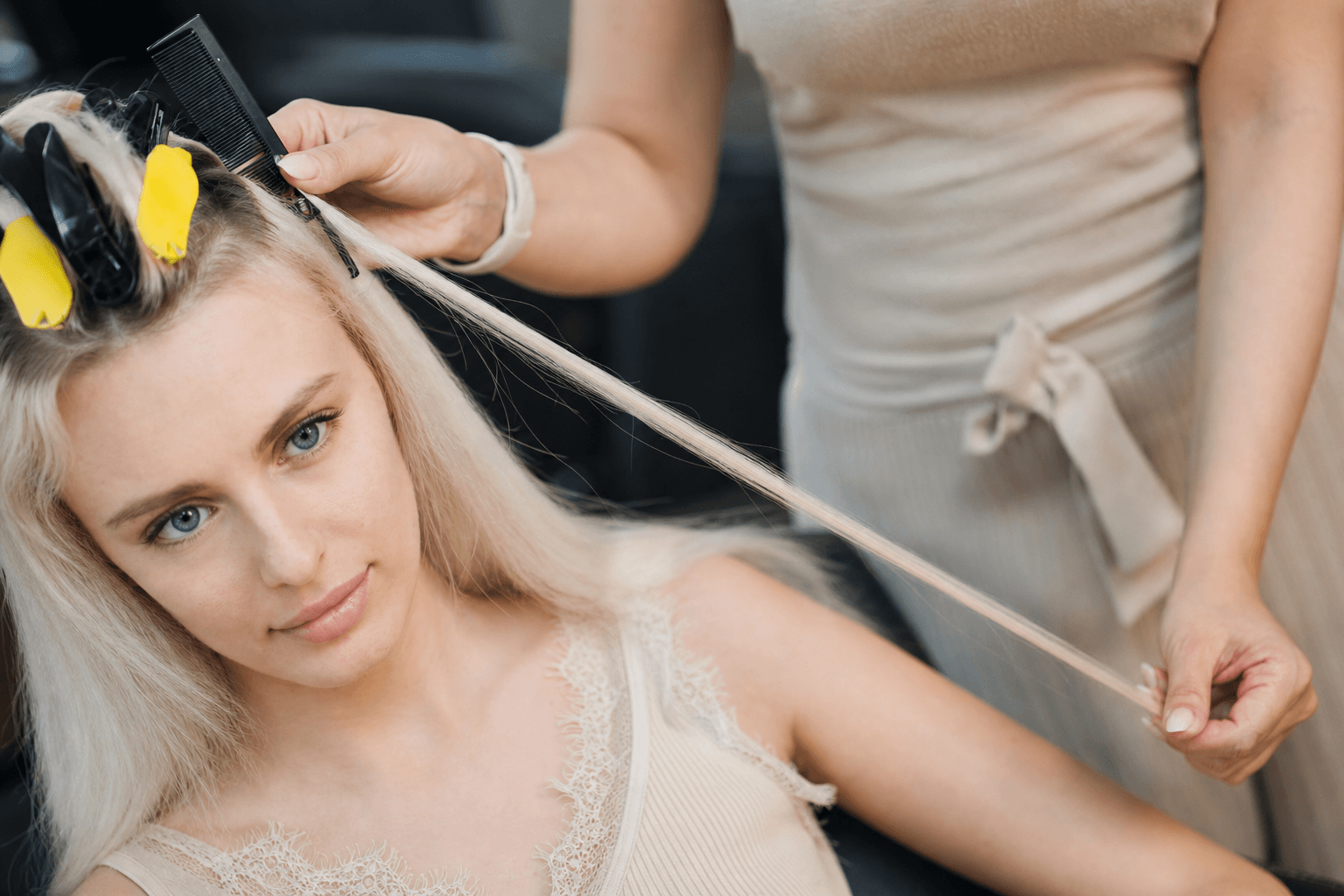
Keratin Bond extensions are attached strand by strand, each bond fused individually rather than in rows. That individual placement is what gives the most natural movement and fall, closest to how your own hair moves, since there's no row structure underneath. It's the longest appointment of the three, from $699, around 2 hours and up, which reflects the extra time spent placing each bond by hand.
Microbead (I-Tip)
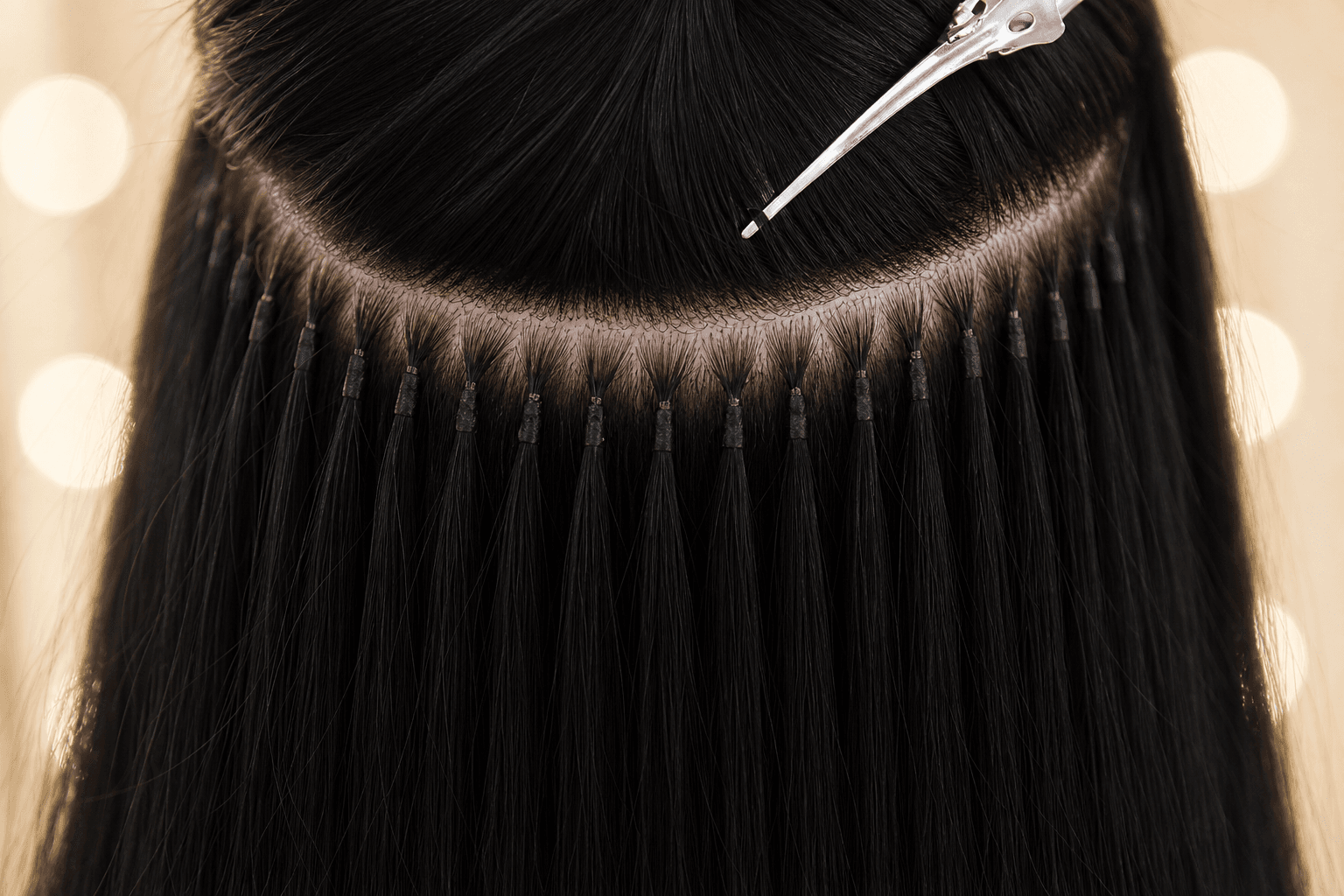
Microbead, also called I-Tip, is heat-free: each strand is clamped into a small bead rather than fused with heat or glue. That's worth knowing if you'd rather avoid added heat on your natural hair. Because the beads aren't fused in place, a microbead install can often be adjusted and moved back up as your own hair grows, rather than needing a full reinstall straight away. From $599, about 1 hour 45 minutes and up.
So which one should you choose?
Every hair extension appointment starts with a real consultation, not a fixed package, because the right method (and the final price) depends on your own hair thickness, texture, and how much length or volume you're after. As a general guide:
- Silk Flat Weft: $699 introductory offer, flat rows, a quick way to add noticeable length and volume
- Keratin Bond (K-tip): from $699, 2hrs+, individually fused bonds, the most natural fall
- Microbead (I-tip): from $599, 1hr45min+, heat-free, individually placed, adjustable as hair grows
Looking after your extensions, whichever method you choose
However you get fitted, the American Academy of Dermatology recommends wearing extensions or weaves for two to three months at most before giving your natural hair a break, and treating pain or a headache from a tight install as a real sign to have it loosened rather than something to push through. Starting with clean, product-free hair and keeping it moisturised with conditioner throughout also makes a genuine difference to how your natural hair copes underneath.
Will hair extensions damage my natural hair?
Properly fitted extensions shouldn't, but tension is the real risk factor, not the method itself. If a style feels tight or causes headaches, that's a sign to have it loosened, not something to push through (see the American Academy of Dermatology guidance above).
How is the final price worked out?
Silk Flat Weft is $699 as an introductory offer ($300 holding deposit, $399 on the day). Keratin Bond (from $699) and Microbead (from $599) are priced from a starting figure because the real cost depends on how much hair is used, confirmed at your consultation rather than guessed in advance.
Can I switch methods later if one doesn't suit me?
That's exactly what the consultation is for. If a method isn't giving you the result or feel you want, raise it before your next appointment so a different method can be considered.