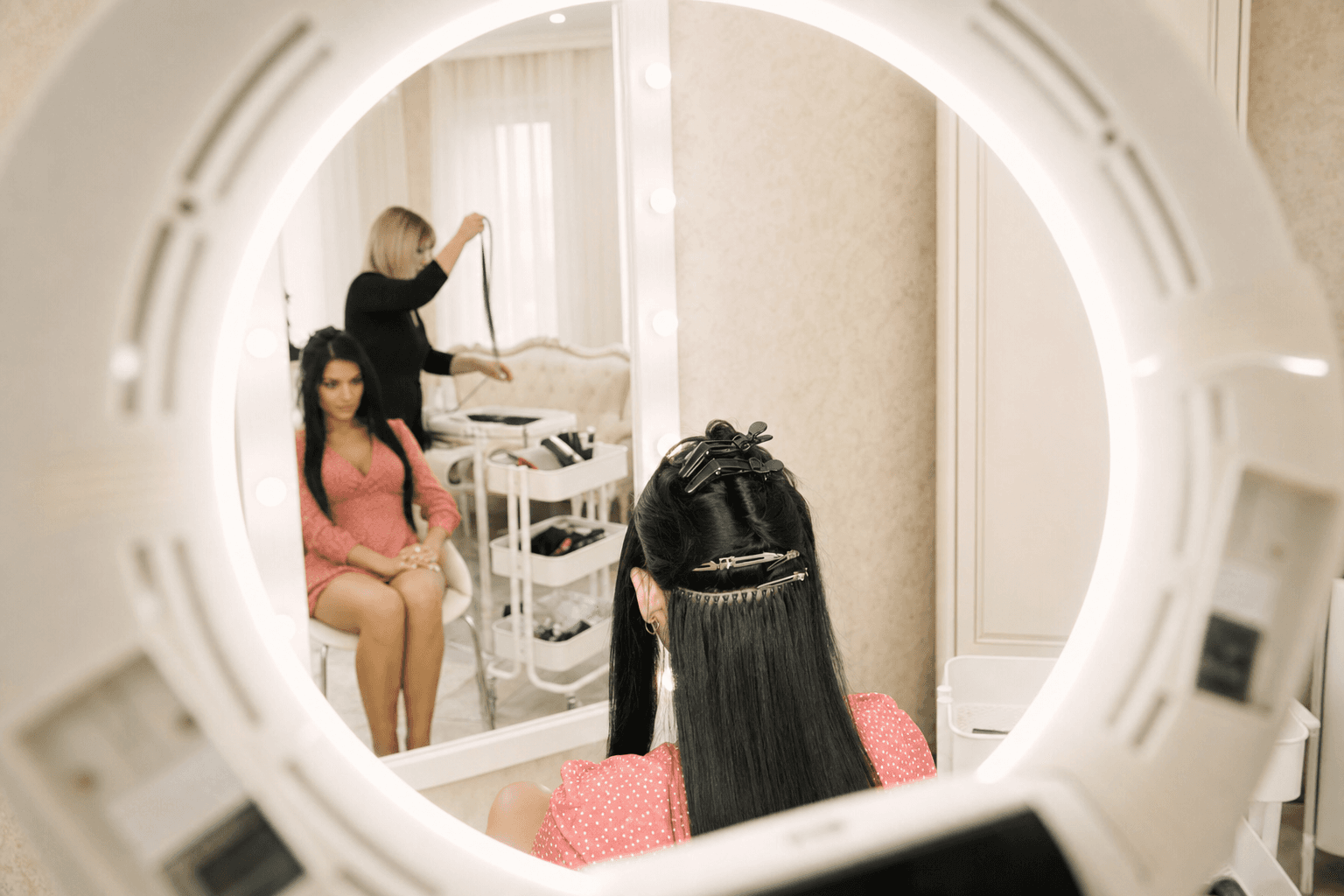
If your hair is fine or thin, extensions can add the volume you're missing, but the method and the amount of hair matter more than they do for thick hair. Here's how the three methods we offer in Penrith compare, and what we check first.
Why the consultation comes first
Your consultation looks at your hair's thickness and texture, and the length or volume you're after, before any method is chosen. With fine hair that matters even more: the aim is enough hair to give you the look you want, matched and blended so it sits naturally, without more weight than your own hair is comfortable carrying.
How the three methods compare
- Weft: flat rows that sit against the head and stay discreet under your own hair. A quick way to add volume in one appointment. See weft extensions.
- Keratin bond (K-tip): small bonds placed strand by strand, with no rows underneath, for the most natural movement. See keratin bond extensions.
- Microbead (I-tip): heat-free beads placed strand by strand and adjustable as your hair grows. See microbead extensions.
A partial top-up (50g) is often enough when the goal is volume rather than length, and it's also the most affordable option. Real prices for every amount are in our hair extensions cost guide.
Looking after fine hair underneath
The American Academy of Dermatology points to tension as the main risk, so have anything tight loosened, keep your hair conditioned, and give it a break after two to three months. Our guide to how long hair extensions last covers the rest.
Can I get hair extensions if my hair is thin?
Often, yes. The consultation checks your hair first and recommends the method and amount that suits it.
Which method is best for fine hair?
It depends on your hair and the result you want, which is exactly what the consultation is for. All three methods can work; the amount of hair and how it's placed matter most.